
Posted on

2025 Christmas Message for Our Emotional Support Animal & Service Dog Community

2025 Christmas with ESA and Service Dog

As the holiday season arrives and homes fill with lights, laughter, and reflection, we want to take a moment to speak directly to the heart of our community — the individuals and families who rely on emotional support animals and service dogs every day.

Christmas can be joyful, but it can also be heavy. For many, it brings reminders of loss, anxiety, grief, loneliness, or overwhelming change. And in those moments — often quietly and without recognition — emotional support animals and service dogs show up with unwavering presence.

This message is for you. And for them. 💛


🐾 More Than Companions — A Source of Stability

Emotional support animals don’t just offer comfort — they offer consistency.
Service dogs don’t just assist — they provide freedom and safety.

During the holidays, routines shift. Homes are fuller. Travel, social obligations, and expectations can feel like a lot. For many people, their animal is the one steady presence that helps regulate emotions, ground anxious thoughts, and create a sense of calm when everything else feels loud.

That bond isn’t small. It’s meaningful. And it’s real.


🎁 For Those Navigating the Holidays Quietly

Not everyone experiences Christmas the same way — and that’s okay.

Some are grieving loved ones.
Some are managing mental health challenges.
Some are facing housing stress, financial uncertainty, or strained relationships.
Some are simply doing their best to make it through the season.

If your emotional support animal or service dog is helping you through a difficult moment — you are not weak. You are supported. And you are not alone.


🏡 A Season of Compassion, Inclusion, and Understanding

At this time of year, we also encourage compassion — especially around emotional support animals and service dogs.

Not every disability is visible.
Not every need looks the same.
And not every support animal’s work is obvious to others.

Choosing kindness, patience, and understanding makes the season brighter for everyone — especially for those quietly carrying more than others may see.


Gratitude for Our Community

We are deeply grateful for every person who trusts us, learns with us, and shares their journey with us. The stories we hear throughout the year — of relief, protection, and regained stability — remind us why this work matters.

And we’re especially grateful for the animals who give so much, asking for nothing in return.

They are family.
They are support.
They are love in its purest form.

Christmas with Emotional Support Animals and Service Dog

🎄 A Holiday Wish from All of Us

As Christmas approaches, we wish you:

  • Peace in moments of stress
  • Comfort in moments of uncertainty
  • Warmth in moments of loneliness
  • And continued strength through the bond you share with your animal

May your home be filled with calm, your heart with reassurance, and your season with gentleness — whether your holiday is joyful, quiet, complicated, or all of the above.

From all of us, Merry Christmas and Happy Holidays to our incredible emotional support animal and service dog community. 💚🐾


🤍 A Final Note

If this season is hard, please know that support exists — sometimes in the form of a conversation, sometimes in professional help, and sometimes curled up beside you, offering silent understanding.

You matter.
Your journey matters.
And your support animal matters.

Posted on

DOT Forms Explained: Flying With a Service Animal (2025 Guide)

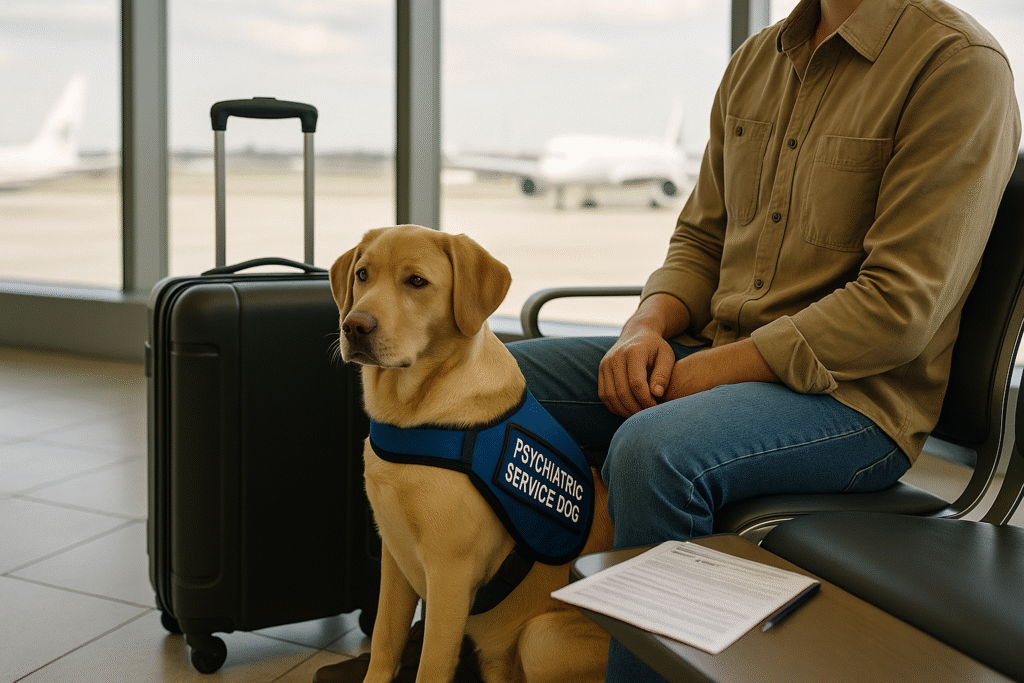
Flying with a Service Dog 2025

Introduction

If you’ve tried flying with a service dog in the last few years, you’ve probably noticed something: airlines love paperwork.

Since the Department of Transportation (DOT) updated its rules in 2021, every U.S. airline now requires specific federal forms for passengers traveling with a service animal — even if your dog is impeccably trained.

By 2025, these forms haven’t gone away… and they’re not optional. Airlines require them to confirm that:

  • your dog is trained,
  • they can behave safely in the airport and cabin,
  • and they won’t cause disruptions during the flight.

The good news? Once you understand the forms, flying with a Service Dog or Psychiatric Service Dog (PSD) becomes dramatically easier.
This guide breaks the DOT forms down in plain English, helping you avoid last-minute airport stress and making sure you’re fully compliant before takeoff.


🔗 Jump to a Section


What Are the DOT Service Animal Forms?

The Department of Transportation created two forms:

1️⃣ DOT Service Animal Air Transportation Form (Required for all flights)

This is the main form. It confirms your dog is:

  • trained to perform tasks
  • under your control
  • safe to travel
  • housebroken

2️⃣ DOT Service Animal Relief Attestation (Required only for flights 8+ hours)

This form confirms your dog:

  • won’t need to relieve itself during the flight, OR
  • can relieve itself hygienically without health or sanitation risks

If the flight is less than 8 hours, you’ll only need the first form.


Who Needs To Submit DOT Forms?

These forms are required only for:

  • Service Dogs
  • Psychiatric Service Dogs (PSDs)

They are not accepted for:

  • Emotional Support Animals (ESAs)
  • Therapy animals
  • Pets

If you’re flying with an ESA, the animal is treated as a pet — meaning fees, size limits, weight limits, restrictions, and carrier rules all apply.


Understanding the DOT Air Transportation Form

This is the form most people get confused about, so let’s break it down section by section.

🐶 1. Animal Identification

You’ll list your dog’s:

  • name
  • breed
  • weight
  • age

This helps airlines ensure the dog meets cabin safety guidelines.

🧠 2. Handler Information & Disability Confirmation

The form asks you to certify that:

  • you have a disability
  • your dog is trained to perform specific tasks related to that disability

You do not need to reveal your diagnosis.

🐕‍🦺 3. Training Confirmation

You must confirm that your service dog:

  • is trained to behave appropriately
  • can remain under control
  • won’t bark, growl, lunge, or disrupt passengers
  • can handle airport environments

If your dog is reactive, airlines may deny boarding — even with forms. According to the Americans with Disabilities Act (ADA), anyone may train their own service dog, so it’s perfectly legal and acceptable to put your name and number on the trainer/training organization section of this form.

🏥 4. Health & Behavior Attestation

You’re confirming your dog:

  • is free from communicable diseases
  • is vaccinated
  • won’t act aggressively under stress

💼 5. Responsibility Agreement

You agree to cover any damage your dog causes (which almost never happens with well-trained service dogs).


Understanding the DOT Relief Attestation Form

Only required for long flights (8 hours or more).

You’ll check ONE of two boxes:

✓ “My dog can go the full flight without needing to relieve itself.”

or

✓ “My dog can eliminate in a manner that does not pose a sanitation risk.”

(i.e., using an absorbent pad in an emergency)

Most PSD owners use the first box unless their dog is medically unable to hold for long periods.

Flying with a Psychiatric Service Dog

How To Submit DOT Forms to Your Airline

Each airline has its own submission process.
Here’s how most of them work:

✈️ 1. Submit Online

Most airlines upload your form into your reservation.
Examples:

  • American Airlines: online submission portal
  • Delta: upload to “My Trips”
  • United: email + digital form

✈️ 2. Submit Ahead of Time

Airlines recommend sending forms 48–72 hours before your flight.

✈️ 3. Carry Printed Copies

Even if the airline has your forms on file, bring paper backups.
Gate agents often request to see them.

  • Southwest Airlines requires the hard copy to be brought to the ticket counter for check-in.

How Airlines Evaluate Your DOT Forms

Airlines typically look for:

✔ Completed forms (no blanks)

One missing section can cause last-minute denials.

✔ Realistic answers

If your “2-month-old puppy” is marked as fully trained, that’s a red flag.

✔ Consistent information

Weight, breed, training confirmations — details should match your dog’s appearance and behavior.

✔ Good behavior at the airport

Ultimately, the dog’s conduct matters more than the form.


Common Mistakes Travelers Make

Here are the issues that cause the most airport delays:

❌ Submitting forms too late
❌ Forgetting the Relief Attestation on long flights
❌ Listing tasks poorly (“provides comfort” ≠ a PSD task)
❌ Flying with a dog that isn’t truly task-trained
❌ Not carrying physical copies
❌ Assuming the airline “already has it”
❌ Bringing a reactive dog

Behavior is the #1 reason service dogs get denied boarding.
Even with perfect paperwork, airlines can legally deny dogs that aren’t under control. This means verbal commands or hand signals.


What Documentation Helps (Even Though It’s Not Required)

Legally, airlines can only require DOT forms.

But practically?

Gate agents often feel more confident when you also have:

Service Dog Vests


It’s not mandatory — but it dramatically cuts down on questioning or confusion.


Do PSD Letters Still Matter?

Yes — but not for the reason people think.

✔ Airlines do not require PSD letters

However…

✔ Housing providers do still require them

and

✔ PSD letters help validate legitimacy if airline staff asks clarifying questions

PSD letters from licensed providers (LMHPs) demonstrate:

  • you have a qualifying psychiatric disability
  • your PSD helps alleviate symptoms
  • you receive care from a professional
  • you’re not misrepresenting a pet as a service dog

This reinforces your credibility across all settings, including airports.


Sample Airline-Ready Checklist

Before every flight, confirm:

✔ DOT Air Travel Form (completed)

✔ Relief Attestation (if needed)

✔ Travel-day printed copies

✔ Dog’s vaccinations

✔ Vest, leash, harness

✔ Backup documents

✔ Dog is groomed and clean

✔ Dog is comfortable with airports

✔ Dog can remain calm under stress

If your dog is anxious in crowds, practice at home or in public spaces before flying.


The Bottom Line

Flying with a Service Dog or Psychiatric Service Dog is absolutely doable — but only if you’re prepared. The DOT forms aren’t meant to be scary or intrusive. They exist to keep passengers safe, ensure legitimate service dog access, and prevent fraudulent claims from making travel harder for those who truly rely on their dogs.

The key is simple:
✔ Understand the forms
✔ Submit them early
✔ Keep your PSD trained and confident
✔ Carry clear, professional documentation

If you need help getting properly documented — or transitioning an ESA into a PSD when appropriate — NSAR can guide you through the process with licensed providers and trusted documentation recognized nationwide.

You and your PSD deserve stress-free travel. ✈️🐕‍🦺
And preparation is everything.

Posted on

How to Prepare Your Psychiatric Service Dog (PSD) for a Flight (2025 Guide)

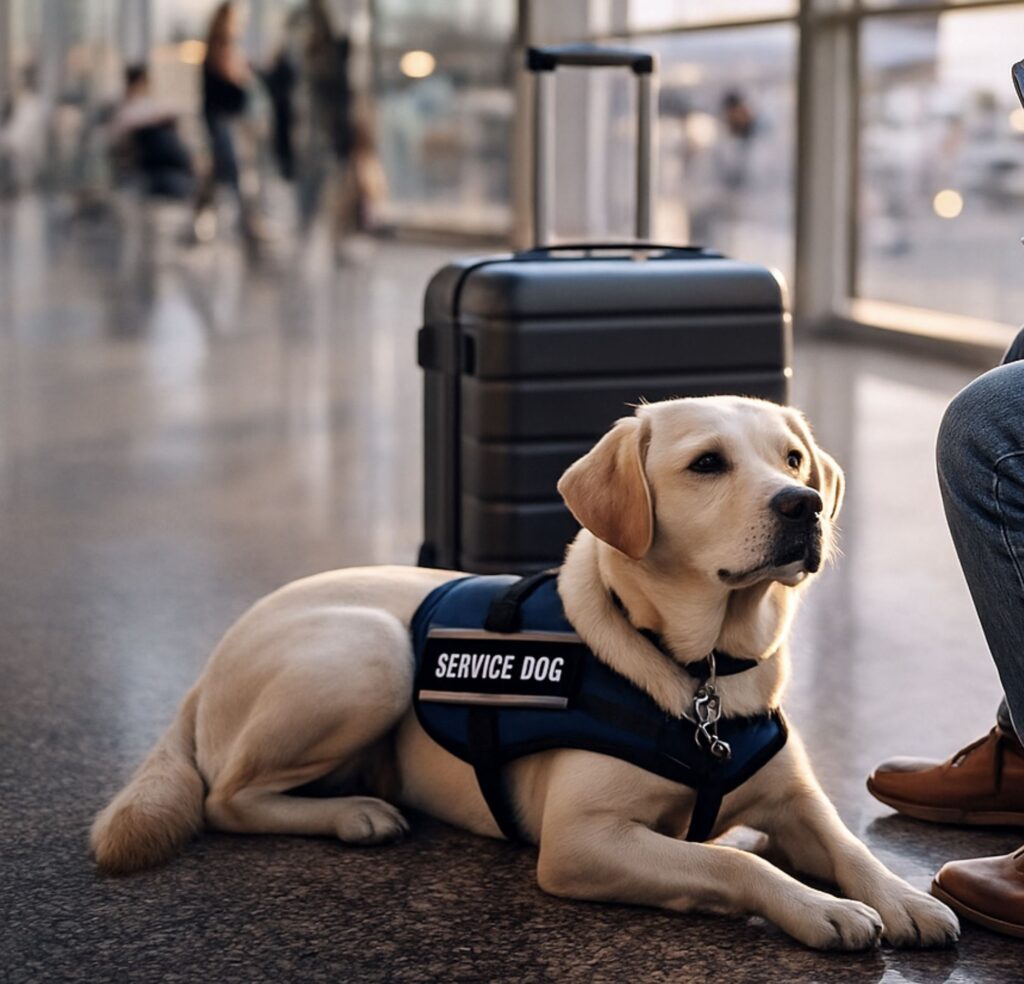
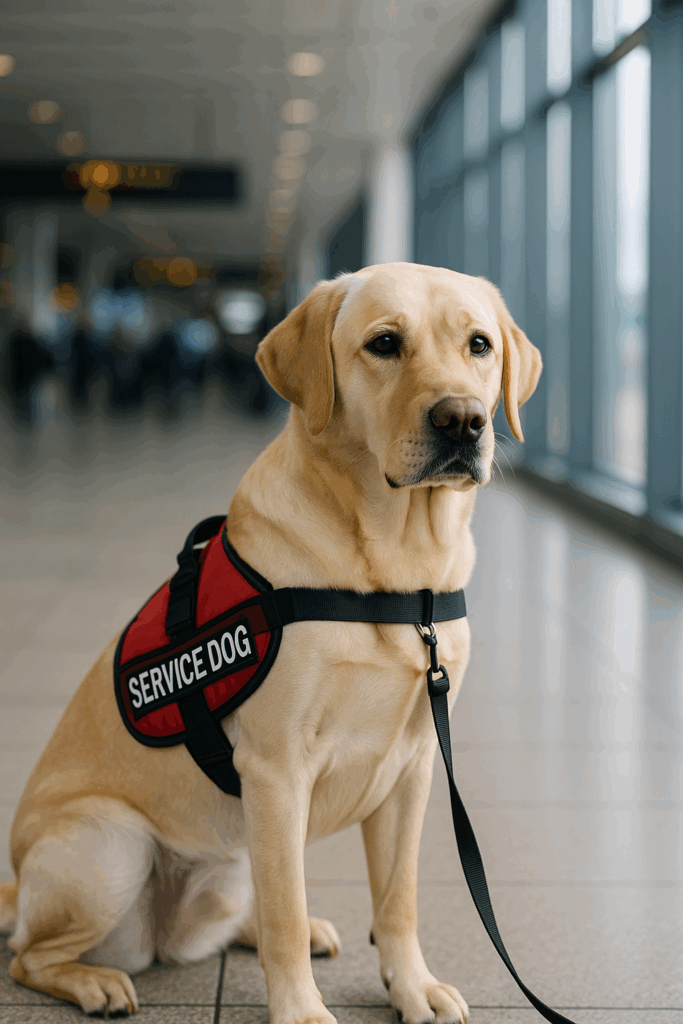
Service Dog at Airport with Bag

Flying can be overwhelming for anyone — crowds, long lines, noise, tight spaces — but if you’re managing PTSD, panic disorder, major anxiety, or another psychiatric condition, the airport can feel like a minefield. That’s exactly why many people rely on a Psychiatric Service Dog (PSD).

But here’s the thing: even a well-trained PSD isn’t automatically ready for the chaos of modern air travel. Preparing ahead of time makes the experience safer, smoother, and far less stressful for both you and your dog.

This guide breaks down everything you need to know for 2025 air travel rules, including documentation, training expectations, airport procedures, and how to help your PSD stay calm in-flight.


🔗 Jump to a Section


Understanding PSD Air Travel Rules (2025 Update)

In early 2021, the U.S. Department of Transportation (DOT) changed the rules for animals on airplanes — and those rules still guide airlines today.

Here’s the simplest way to put it:

✈️ What airlines must accept

Airlines are legally required to accept Psychiatric Service Dogs if:

  • They’re trained to perform tasks related to a disability
  • They behave appropriately in public
  • You submit the required DOT Service Animal Forms

🐶 What airlines no longer accept

Airlines are not required to accept Emotional Support Animals (ESAs) for free, that is. Only task-trained service dogs qualify — and the airline will treat ESAs as pets. ESAs can fly, following the airlines’ pet policies and procedures.

✍️ DOT Forms You’ll Complete

Most airlines now require:

These forms confirm:

  • Your PSD is fully trained
  • Your dog can behave safely in airports and cabins
  • Your dog will not need to relieve itself mid-flight

Many travelers don’t realize this until the day of their flight, which leads to panic and last-minute cancellations. Preparing ahead avoids that mess entirely.

How you submit this form to the airline may differ depending on the airline you’re flying with. Please contact the airline directly or google how you submit these forms with each airline.


Documents You’ll Need Before Flying

Every airline is slightly different, but the following documents are universal across the U.S. in 2025:

📄 1. DOT Service Animal Air Transportation Form

This is your “main document” — think of it like your PSD’s boarding pass.

📝 2. DOT Relief Attestation (if required)

Required for flights 8+ hours.

💉 3. Proof of Vaccination & Health

Most international airlines will ask for updated vaccinations. Some request a recent veterinary health certificate, but these are not required for domestic travel within the U.S.

4. Optional but Helpful: PSD ID & Registration Materials

While not required by law, these items prevent a lot of awkwardness at security and gates:

  • PSD ID card
  • Vest or harness with “Service Dog” patches
  • NSAR training certificate (optional but helpful)

Airline staff don’t always know the law. Having visible identification makes everything smoother.

📌 Important Note

There is no legal registry for service dogs — but clear, professional documentation from NSAR helps staff quickly recognize your PSD’s role and reduces questions.

Service Dog Getting Ready To Fly

Training Your PSD for Air Travel

Even if your dog is solid in public, the airport is a different world. You’ll want to make sure your PSD is prepared for:

  • Crowds
  • Rolling luggage
  • Loudspeaker announcements
  • TSA screening
  • Long periods under the seat
  • Narrow walkways and tight rows
  • Takeoff/landing pressure changes

Here’s how to prepare:

🐾 1. Practice “Under”

Your PSD should comfortably lie under your legs or under a chair for extended time. Use restaurants or cafés for practice.

🐕 2. Noise Desensitization

Play airport sounds (e.g., baggage carts, intercoms, jet engines) at gradually increasing volume while your PSD stays relaxed.

🚶 3. Tight-Space Walking

Practice walking slowly through narrow spaces — like between grocery aisles or between chairs.

👥 4. People & Distraction Training

Your PSD must ignore:

  • Food
  • Children
  • Other dogs
  • TSA officers
  • Rolling suitcases

A PSD sniffing people or lunging toward food is a red flag for airline staff.

🤲 5. Task Training Tune-Up

Your dog should be fluent in your psychiatric support tasks such as:

  • Deep pressure therapy
  • Panic interruption
  • Grounding during dissociation
  • Blocking/creating space in crowds
  • Medication retrieval

Airlines may ask about your tasks; they may not require demonstrations, but they do have the right to verify your dog’s training verbally.


At the Airport: What to Expect

Every airport is slightly different, but most follow the same flow.

🛂 1. Check-In

This is where gate agents may ask:

  • “Is this a service dog required because of a disability?”
  • “What tasks is your dog trained to perform?”

Your answers should be calm and concise.

🔍 2. TSA Screening

You’ll walk through the scanner first.
Your PSD will follow on a leash — not through the X-ray belt.

TSA will:

  • Ask you to wait
  • Ask your dog to walk through
  • Possibly swab your hands for explosives

⏳ 3. Waiting at the Gate

Use this time to:

  • Offer water (not too much)
  • Give your PSD a chance to bathroom before boarding
  • Do one or two grounding tasks to keep calm

✈️ 4. Boarding

Service dogs usually board with priority groups.
Let agents know you need a moment to get settled. They are generally helpful if you communicate clearly.


During the Flight

Once onboard:

🐕 Keep Your PSD in “Under” Position

Your PSD must remain:

  • Under your seat
  • At your feet
  • Or in your lap only if small enough (airlines vary)

💧 Keep Hydration Controlled

Give small amounts of water — enough to stay comfortable but not so much they need to relieve themselves.

🎧 Ground Yourself & Your PSD

If your PSD performs anxiety or grounding tasks, cue them as needed. Flights can trigger symptoms at unexpected times — that’s what your PSD is there for.

🧘 Stay Calm

Your dog mirrors your energy. The calmer you remain, the calmer your PSD will be.


After Landing

When the plane lands:

  • Let other passengers pass to avoid crowding your PSD
  • Offer water and praise
  • Head to the nearest relief area (every airport must have one)

Your PSD may be overstimulated after hours of noise and confinement. Give them a few minutes to re-regulate.


FAQs About Flying With PSDs

Do airlines still allow ESAs?
No. Only trained service dogs qualify.

Can airlines ask for proof of training?
They can ask what tasks the dog performs, but they cannot demand training records.

Does my PSD need a vest?
Not legally — but it helps avoid confusion.

Can my PSD sit in an empty seat?
No. Service dogs cannot occupy seats.

What if someone on board is allergic or afraid of dogs?
Airlines usually rearrange the other passenger, not you.


The Bottom Line

Flying with a Psychiatric Service Dog can make travel dramatically safer and more manageable — but preparation is everything.

When your PSD is well-trained, properly documented, and ready for the airport environment, traveling becomes far smoother and far less stressful.

Your best move is to make sure:

  • Your PSD is task-trained
  • You have your DOT forms ready
  • Your documentation is clear and professional

👉 If you need a legitimate PSD letter or registration materials to support your travel, NSAR can help you get fully prepared and compliant.

Travel confidently. You and your PSD are a team — and you’ve got this.

Posted on

The Importance of Proper Identification for Service Dogs

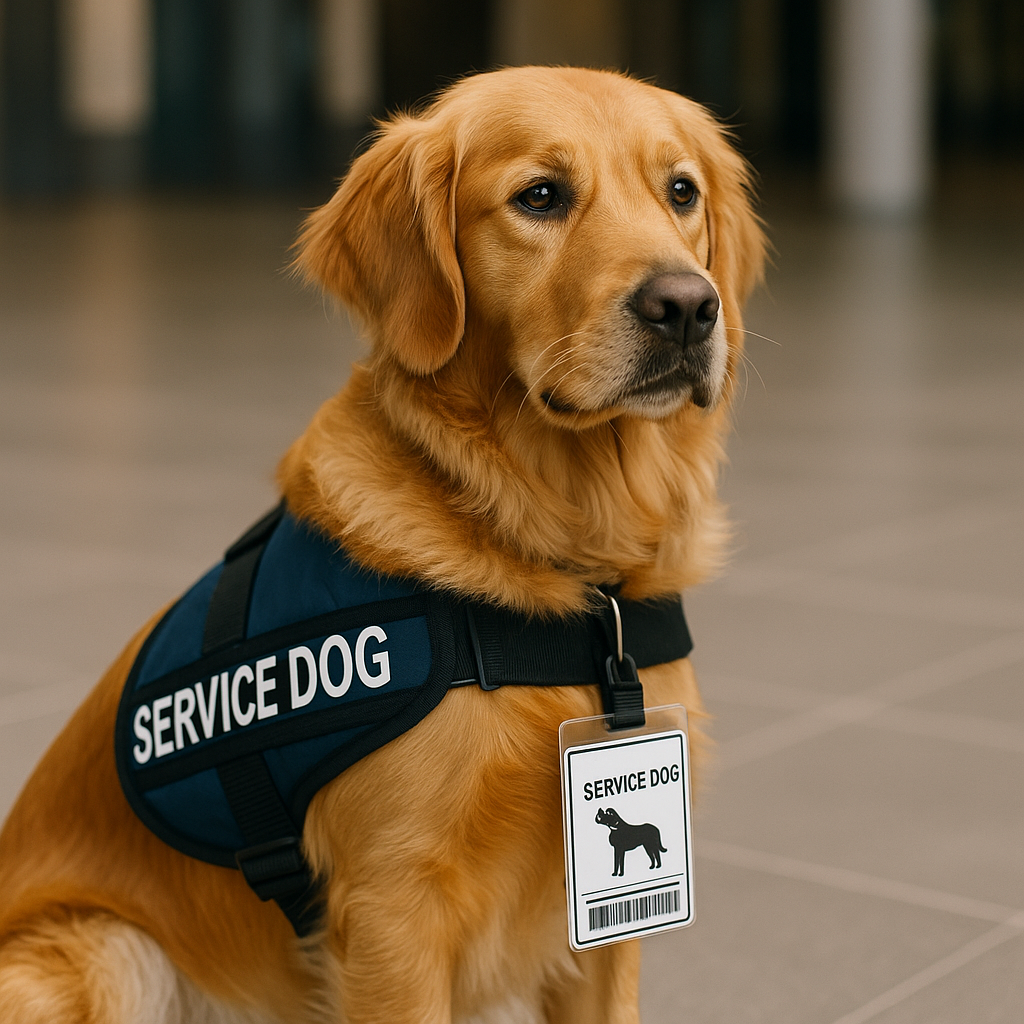
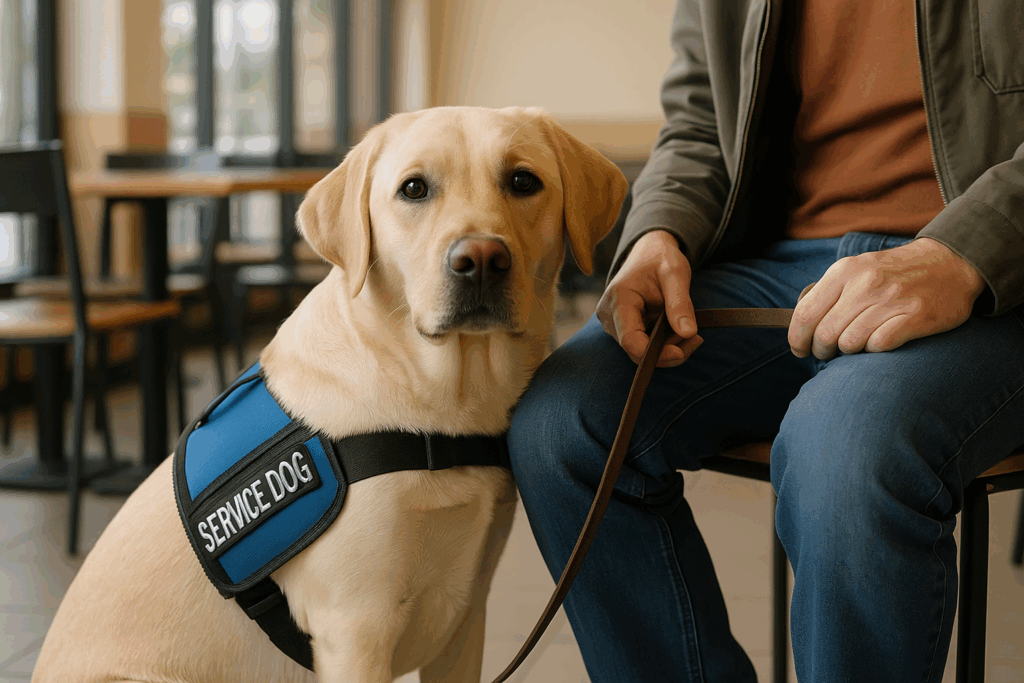
Golden Retriever service dog wearing a blue vest and ID tag sitting attentively in a public indoor area.

Introduction: More Than Just a Vest

Imagine walking into a grocery store with your service dog, only to be stopped and questioned—again. Despite legal protections, many handlers face challenges simply because others can’t recognize that their dog is performing life-saving tasks. That’s where proper identification becomes more than just a tool—it becomes a bridge to understanding, access, and respect.

In this comprehensive guide, we’ll explore:

  • What qualifies a dog as a service dog
  • The role of identification in public spaces
  • What the law says (and doesn’t say) about ID requirements
  • Benefits of clear, visible identification
  • How to choose proper ID gear
  • Myths and misconceptions about identification
  • What businesses need to know
  • FAQs and practical tips

Whether you’re a new handler, a therapist, or just curious, this article is your go-to resource.


What Is a Service Dog?

A service dog is defined under the Americans with Disabilities Act (ADA) as a dog that has been individually trained to perform tasks or do work for a person with a disability. These tasks may include:

  • Guiding individuals with visual impairments
  • Alerting to seizures or medical conditions
  • Providing deep pressure therapy for PTSD
  • Retrieving items or opening doors
  • Interrupting harmful behaviors

Service dogs are not pets. They are trained medical tools that support independence and safety.


Legal Rights and Protections

Under the ADA:

  • Service dogs are permitted in all public areas (hotels, restaurants, stores, public transit).
  • Staff may only ask:
    1. Is the dog a service animal required because of a disability?
    2. What task has the dog been trained to perform?

They cannot ask for:

  • Medical documentation
  • Proof of training
  • An ID card or registration

Some states offer voluntary identification or registry systems, but federal law always takes precedence.


Why Identification Matters (Even If It’s Not Required)

Although the ADA doesn’t mandate ID, identification still offers these benefits:

Reduces confrontation and questions
Signals legitimacy in crowded or uncertain situations
Discourages unwanted petting or distractions
Improves safety in emergencies or travel
Increases handler confidence and peace of mind

In other words, ID gear makes life easier for both the service dog and the handler.


Common Types of Service Dog Identification

? Service Dog Vest

  • Most recognizable
  • Usually marked “Service Dog” or “Do Not Pet”
  • Durable, breathable materials

ID Cards or Tags

  • Include dog’s name, handler name, ADA info
  • Can be shown when traveling or dealing with gatekeepers

? Leash Wraps or Patch Kits

  • Ideal for small dogs or secondary messaging
  • Allow customization without a full vest

How to Choose the Right ID Gear

When selecting identification for your service dog, consider:

  • Durability: Choose weather-resistant, washable materials.
  • Comfort: Lightweight, breathable materials reduce stress.
  • Visibility: Bright colors or reflective stitching improve visibility.
  • Functionality: Choose gear that supports the tasks your dog performs.

? Tip: Less is more. A clean, simple vest with clear wording is more effective than flashy accessories.


Common Myths and Misconceptions

Myth #1: All service dogs are required to wear a vest or ID.

Fact: There is no federal requirement for any form of ID, vest, or tag; however, it can decrease confrontations and/or questions that would prevent you from entering an establishment.

Myth #2: Staff can demand to see certification or paperwork.

Fact: Under ADA rules, only two questions are allowed (Is it a service animal? What task does it perform?). No paperwork is required, but is often more helpful than filing an ADA complaint.

Myth #3: Only large breeds can be service dogs.

Fact: Any breed or size can qualify if properly trained to perform a task related to a disability.

Myth #4: Emotional support animals (ESAs) and therapy animals get the same access.

Fact: Only service dogs have full public access rights. ESAs and therapy animals are covered under different laws (e.g., the Fair Housing Act).

Myth #5: Identification guarantees access.

Fact: It helps, but access is based on the dog’s function and behavior—not the vest or tags.


What Businesses Need to Know About Service Dog Identification

Business owners and employees play a crucial role in upholding ADA rights while maintaining safe and respectful environments. Here’s what you should know:

What You Can Do

  • Ask the two permitted questions (Is it a service dog? What task?)
  • Expect the dog to be under control and well-behaved
  • Request removal if the dog is out of control or not housebroken

? What You Cannot Do

  • Ask for medical documentation
  • Require the dog to wear a vest or ID
  • Charge a pet fee or deny access based on allergies or fear

? Best Practices for Staff Training

  • Train employees on ADA compliance
  • Post clear signage welcoming service animals
  • Handle issues discreetly and respectfully

? Real-World Tip for Businesses:

If a dog is disruptive (barking, lunging, relieving itself), you are within your rights to ask that it be removed. However, do not assume based on breed, size, or lack of visible ID.

A well-groomed Golden Retriever service dog sits calmly on a wood-grain floor in a softly lit indoor environment, wearing a navy service vest with an ID badge visible on its chest.

Real-Life Example: Identification in Action

Elena, a handler with narcolepsy, often experiences sudden episodes of muscle weakness. Her service dog, Bruno, wears a vest clearly marked “Medical Alert Dog – Do Not Distract.” While boarding a flight, an airline staff member started questioning her. Elena calmly pointed to the ADA card clipped to her vest. The situation resolved quickly—no further delay, no confrontation.

Proper ID can’t stop every issue, but it equips you to handle them confidently.


Frequently Asked Questions

❓ Is a vest legally required for my service dog?

No. It’s highly recommended, but not required under federal law.

❓ What’s the difference between a service dog and an ESA?

Service dogs are task-trained for disabilities and have public access rights. ESAs offer comfort and support but are not granted public access under the ADA.

❓ Can a business deny me if my dog isn’t wearing ID?

Legally, they cannot deny access based on lack of ID. However, ID often prevents misunderstandings.

❓ Can I buy a vest online for any dog?

Yes—but misuse is illegal and unethical. Only legitimate service dogs should wear identifying gear.

❓ What should I do if I’m denied access?

Remain calm. Educate if possible. File a complaint with the Department of Justice (ADA.gov) or a local advocacy group.


Practical Tips for Handlers

  • Keep an ADA info card with you or clipped to your dog’s vest.
  • Avoid confrontations—calmly state your rights.
  • Choose identification that’s clear, comfortable, and specific.
  • Have backup gear when traveling.
  • Document recurring access issues in case legal support is needed.


Data and Credible Sources


Final Thoughts: Visibility Builds Understanding

In a perfect world, no one would question a service dog team. But in reality, misunderstandings happen. Identification can’t replace legal rights, but it can support them. It’s a simple tool that promotes trust, eases access, and educates the public—all while giving the handler confidence.

You don’t have to wear a badge to be a hero. But a vest on your dog can help others recognize that they are one.


Conclusion

Looking for reliable, ADA-friendly service dog gear?
? Visit NSARCO.com to explore professionally designed service dog vests, ID kits, and education resources to help you navigate public access with ease.

? Want to learn more? Explore related pillar posts:

Posted on

Why Service Dogs Are Heroes in the Workplace

Service Dog at the Office

Introduction: A New Kind of Coworker

Imagine a workplace where loyalty, focus, and compassion walk on four legs. Service dogs are more than companions — they’re dedicated assistants helping individuals with disabilities lead full and productive professional lives. As society shifts toward greater inclusivity and mental health awareness, service dogs are proving to be unsung heroes in offices, retail stores, hospitals, schools, and remote setups.

In this comprehensive guide, we’ll explore the remarkable impact of service dogs in the workplace, their legal rights, the benefits they bring to employees and employers, and how organizations can accommodate these working animals with grace and confidence.


What Is a Service Dog?

Service dogs are specially trained to perform specific tasks that mitigate their handler’s disability. These can include physical, sensory, psychiatric, intellectual, or other mental disabilities. Unlike emotional support animals or therapy dogs, service dogs are granted access to most public spaces under the Americans with Disabilities Act (ADA).


Key Traits of a Service Dog:

  • Individually trained to perform tasks
  • Under control of their handler at all times
  • Focused and non-disruptive in public settings

Legal Rights and Protections for Service Dogs in the Workplace

Understanding the legal framework is crucial for both employers and employees. Here’s what you need to know:

Americans with Disabilities Act (ADA)

  • Employers with 15+ employees must provide reasonable accommodations to individuals with disabilities, including allowing service dogs in the workplace.
  • The ADA defines service animals as dogs trained to perform tasks directly related to a disability.
  • Employers can ask only two questions:
    1. Is the dog required because of a disability?
    2. What work or task has the dog been trained to perform?

Other Relevant Laws:

  • Section 504 of the Rehabilitation Act: Applies to organizations receiving federal funds.
  • State Laws: Many states have additional protections for service animals that mirror or expand upon federal rights.

How Service Dogs Support Employees in the Workplace

Service dogs are more than aides — they are workplace enhancers. Their presence allows employees with disabilities to participate fully and confidently.

Examples of Service Dog Tasks in the Workplace:

  • Retrieving dropped items or opening doors for mobility-impaired individuals
  • Alerting handlers to oncoming seizures or low blood sugar
  • Guiding individuals who are blind or visually impaired
  • Providing deep pressure therapy during anxiety attacks
  • Interrupting self-harming behaviors in those with PTSD

Workplace Benefits of Service Dogs

For Employees:

  • Greater independence and confidence
  • Reduced anxiety and panic attacks
  • Increased safety and mobility
  • Decreased reliance on human coworkers for assistance

For Employers:

  • Improved retention of skilled employees with disabilities
  • Enhanced workplace diversity and inclusion
  • Boost in team morale and emotional wellness
Service Dog at Work

Implementing Service Dog Accommodations: Tips for Employers

Creating a service dog-friendly workplace starts with knowledge and planning. Here’s how:

1. Review and Update Policies

  • Ensure your non-discrimination and accommodation policies include service animals.

2. Communicate Effectively

  • Educate staff about service dogs and confidentiality laws.

3. Respect Boundaries

  • Train employees not to distract service dogs while they’re working.

4. Accommodate Workspaces

  • Make minor adjustments like ensuring a dog can lie safely beside a desk.

5. Plan for Allergies or Phobias

  • Use creative solutions like seating changes or air purifiers.

Real-Life Case Studies

Case Study 1: PTSD Support at a Law Firm

A decorated military veteran with PTSD was able to return to legal practice thanks to his service dog, who provides redirection during high-stress court sessions. The firm’s accommodations helped normalize mental health support and inspired others to open up about their own challenges.

Case Study 2: Mobility Assistance in Retail

A retail employee with multiple sclerosis relies on her Labrador to help her navigate the floor and pick up merchandise. Since her onboarding, customer feedback has praised the store’s commitment to inclusivity.


Frequently Asked Questions (FAQs)

Q1: Can service dogs be denied in the workplace?

Only under very limited circumstances, such as if the dog is out of control or poses a direct threat that cannot be mitigated.

Q2: Are emotional support animals covered under the ADA?

No, only service dogs trained to perform specific tasks are covered in workplace settings under the ADA.

Q3: What if another employee has an allergy?

This is handled as a competing accommodation; creative solutions like separate areas or filters can often resolve the issue.

Q4: Do service dogs need certification?

The ADA does not require service dogs to be professionally certified, though documentation from a healthcare provider may support accommodation requests.


Practical Tips for Employees Working with a Service Dog

  • Maintain training and discipline to ensure your dog behaves professionally
  • Keep your animal clean and well-groomed
  • Bring a dog bed or mat to keep your dog comfortable during work hours
  • Be proactive in communication with HR and supervisors

Final Thoughts: Embracing Service Dog Inclusion

Service dogs embody resilience, purpose, and partnership. As workplaces evolve to embrace diversity and inclusion, service dogs represent an opportunity to lead with empathy and action. By supporting employees with service dogs, employers aren’t just checking boxes—they’re fostering a more accessible, compassionate, and productive workplace culture.


Conclusion

Interested in learning how to qualify for a service dog or helping your workplace become more inclusive?

? Register Your Service Dog or Learn About Letters from Licensed Clinicians

Posted on

Training Tips for Service Dogs During the Summer

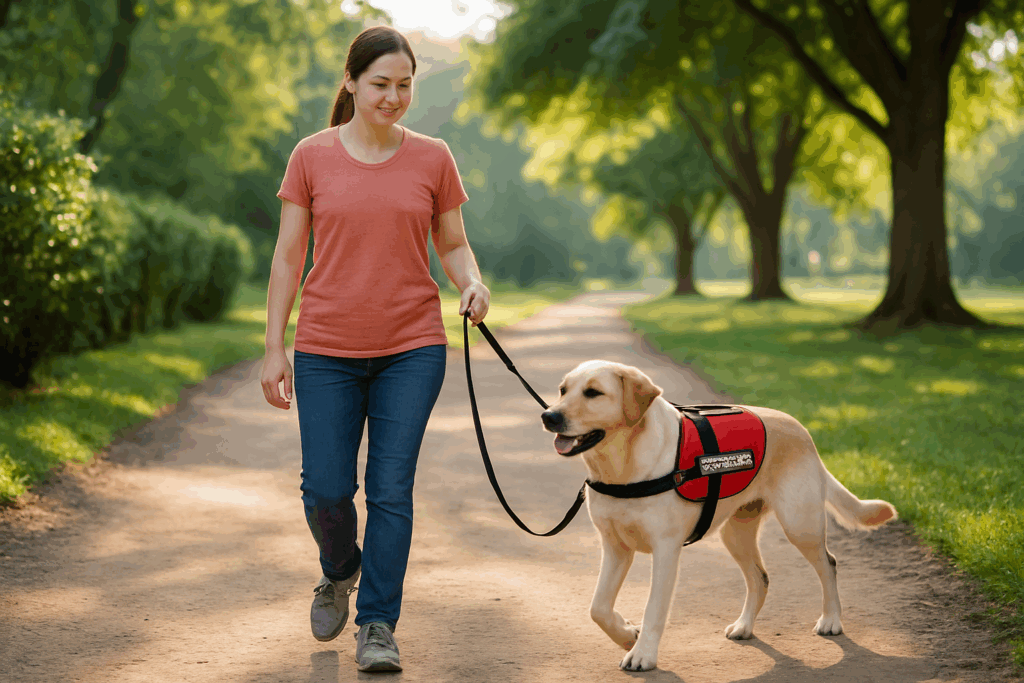
Walking Your Service Dog in Summer

Keep Your Service Dog Cool, Comfortable, and Confident Year-Round

Introduction

Summer is a great time to enjoy the outdoors—but for service dogs and their handlers, rising temperatures present unique challenges. Whether you’re reinforcing obedience, introducing new tasks, or socializing your dog in public settings, heat, humidity, and longer days can impact both training effectiveness and safety.

In this comprehensive guide, we’ll walk you through the most important summer-specific training tips to ensure your service dog stays focused, healthy, and ready to support you. From timing your sessions to hydration strategies, you’ll learn actionable steps that elevate your dog’s performance—no matter how hot it gets.


What Makes Summer Training Different?

Training in the summer isn’t just about hotter temperatures—it’s about how those temperatures affect your dog’s body, behavior, and environment. Service dogs must remain attentive, calm, and task-oriented even in the heat, which means your training approach should be strategic.

Key Summer Challenges:

  • Heatstroke risk and overheating
  • Hot pavement and paw pad injuries
  • Dehydration
  • Increased distractions (crowds, noise, children out of school)
  • Allergens and insects

Summer Safety Basics for Service Dogs

Before diving into training tactics, you must prioritize your dog’s physical health.

1. Watch for Overheating

Dogs don’t sweat like humans. Panting is their main way to cool down, but it has limits.

Warning Signs of Overheating:

  • Excessive panting
  • Drooling
  • Lethargy
  • Vomiting
  • Bright red gums

Tip: Always carry a thermometer. If your dog’s temperature exceeds 103°F, stop immediately and begin cooling.

2. Protect Those Paws

Pavement and asphalt can reach temperatures over 130°F on hot days.

Do the 7-Second Rule: Place the back of your hand on the pavement. If it’s too hot after 7 seconds, it’s too hot for your dog.

Solutions:

  • Train early morning or evening
  • Use dog booties or paw balm
  • Stick to grassy or shaded areas

3. Hydration Is Key

Offer fresh, cool water frequently. Portable collapsible bowls and dog-safe electrolyte supplements are great options.


Ideal Summer Training Times and Locations

Best Training Times:

  • Early morning (before 10 a.m.)
  • Late evening (after 7 p.m.)

Ideal Locations:

  • Shaded parks and trails
  • Indoor pet-friendly stores (Lowe’s, Home Depot, pet supply stores)
  • Air-conditioned dog training facilities
  • Covered patios with cool surfaces

Adjusting Your Training Plan for Summer

1. Shorter Sessions

Keep training sessions under 20 minutes and take breaks. Combine play with training to keep motivation high.

2. Incorporate Cool-Down Breaks

Use a mat in the shade, a cooling vest, or damp towels. Let your dog lie down and rest as part of the training process.

3. Build Public Access Skills Indoors

Summer is a great time to:

  • Practice loose-leash walking in stores
  • Desensitize to crowds or loud noises
  • Reinforce calm behavior in cafés or restaurants

Summer-Specific Training Activities

Task Training Indoors:

  • Retrievals
  • Opening/closing doors
  • Alerting to medical symptoms
  • Deep Pressure Therapy (DPT)

Socialization Opportunities:

  • Summer events with designated dog zones
  • Outdoor markets (early morning)
  • Pet-friendly patio dining (under umbrellas)

Recommended Tools for Summer Training

  • Cooling vests and mats
  • Booties for paw protection
  • Treat pouch with rehydration snacks
  • Portable water bottles with dispensers
  • Clicker or verbal marker
  • Slip-leads or gentle harnesses (avoid heavy gear in heat)

Legal Reminders for Public Access in Summer Settings

Even while training, a service dog in training may not have the same access rights under the ADA as a fully trained service dog. State laws vary.

ADA Quick Facts:

Tip:

Always carry documentation or ID for clarity, even if not legally required.


Real-World Case Example

Case Study: Daisy the Diabetic Alert Dog
Daisy’s handler noticed her alerts dropped during hot summer outings. By adjusting training to early hours, using a cooling vest, and limiting public outings during peak sun, Daisy regained her focus and performance. This case illustrates the need to adapt your training schedule based on your dog’s physical needs.


FAQs: Summer Training for Service Dogs

Q: Can my service dog still train at the beach or on hikes in summer?
A: Yes, but use caution. Train during cooler times, and always check paw temperatures and watch hydration.

Q: Should I skip training on extreme heat days?
A: Yes. Prioritize safety. Use indoor training or rest days as part of your overall plan.

Q: What’s the best cooling vest for service dogs?
A: Look for lightweight evaporative vests from brands like Ruffwear or Kurgo.

Q: Is it OK for my dog to wear a full vest in summer?
A: Use lightweight vests or harnesses to avoid overheating.


Final Thoughts

Training your service dog during the summer can be incredibly rewarding when done with safety and purpose in mind. With proper timing, tools, and flexibility, you can make steady progress—even on the hottest days.


Conclusion

Looking for more support in training your service dog?
? Register your Service Dog with NSAR today for access to identification gear, training resources, and support.

Posted on

The Legal Rights of Service Animals in Public Spaces: What Every Handler Needs to Know

Service Dog Sitting with Handler in Public

The Legal Rights of Service Animals in Public Spaces

Empowering handlers through clarity, confidence, and legal understanding.


Introduction

Imagine being denied entry to a restaurant or hotel simply because of your service animal. Unfortunately, this happens far too often — not because businesses are malicious, but because they don’t understand the law.

For individuals with disabilities, service animals are essential companions, providing vital support that enables independent living. But what legal rights do these animals — and their handlers — actually have in public spaces?

In this comprehensive guide, we’ll break down the legal protections for service animals, help you understand what businesses can and cannot do, and offer real-world tips for advocating for yourself and your animal. Whether you’re a handler, a loved one, or a professional in the ESA/service dog space, this article will equip you with the knowledge you need to navigate public access confidently and lawfully.


What Is a Service Animal?

A service animal is defined by the Americans with Disabilities Act (ADA) as:

A dog that is individually trained to do work or perform tasks for a person with a disability.

Tasks might include:

  • Guiding individuals who are blind
  • Alerting individuals who are deaf
  • Pulling a wheelchair
  • Alerting and protecting a person during a seizure
  • Reminding a person with mental illness to take prescribed medications
  • Calming a person with PTSD during an anxiety attack

? Note: Only dogs (and in some cases, miniature horses) qualify as service animals under the ADA. Emotional Support Animals (ESAs) and therapy animals are not covered under the same legal protections.


Key Legal Protections for Service Animals

1. The Americans with Disabilities Act (ADA)

The ADA guarantees access for service animals in:

  • Restaurants and cafes
  • Retail stores
  • Hotels and motels
  • Public transportation
  • Government buildings
  • Theaters and entertainment venues

Businesses Are Legally Allowed to Ask:

  1. Is the dog a service animal required because of a disability?
  2. What work or task has the dog been trained to perform?

They cannot:

  • Ask about your disability
  • Require medical documentation
  • Demand a demonstration of the dog’s task
  • Charge extra fees for entry

2. Fair Housing Act (FHA)

While ESAs fall under the FHA, it’s important to note that service animals are also protected, meaning:

  • You cannot be denied housing because of your service animal.
  • Landlords cannot charge pet deposits for service animals.
  • Reasonable accommodations must be made, even in “no-pet” housing.

3. Air Carrier Access Act (ACAA)

As of 2021, the Department of Transportation (DOT) now recognizes only trained service dogs as eligible for in-cabin access. Airlines may:

? Emotional Support Animals are no longer granted the same flying privileges.

Service Dog Sitting at an Airport


Where Are Service Animals Not Allowed?

Despite broad protections, service animals may be restricted from:

  • Sterile hospital environments (e.g., surgical suites, burn units)
  • Religious institutions (unless local policies permit)
  • Private clubs or membership-only facilities

A business can also ask the handler to remove a service dog if:

  • The dog is not housebroken
  • The dog is out of control and the handler fails to take action

What Should You Do If Denied Access?

  1. Stay calm and courteous.
  2. Educate: Politely reference ADA laws or show ADA.gov materials.
  3. Document: Record the incident, including names and dates.
  4. Report: File a complaint with the U.S. Department of Justice or your local ADA enforcement office.

? Keep a copy of your service dog’s training certificate or registration handy (though it’s not legally required).


Practical Tips for Handlers in Public

  • Train for distractions: Public environments are full of stimuli.
  • Carry documentation: While not required, it can ease interactions.
  • Use a vest: Helps signal that your dog is working.
  • Plan ahead: Call ahead to venues if you anticipate a conflict.
  • Maintain control: Your dog must be leashed, tethered, or under voice command at all times.

Frequently Asked Questions (FAQs)

❓ Can a business require my dog to wear a vest?

No. The ADA does not require service animals to wear vests, ID tags, or harnesses, though many handlers choose to use them.


❓ Can I bring my service dog into a grocery store?

Yes. ADA laws apply to all areas where customers are allowed to go.

❓ What if my disability isn’t visible?

You are not required to disclose or prove your disability. Businesses may only ask the two ADA-approved questions.

❓ Are psychiatric service dogs (PSDs) covered?

Yes. As long as the dog is trained to perform specific tasks (e.g., interrupting self-harm), PSDs are protected under the ADA.


Real-World Example

Case Study:
In 2019, a veteran with PTSD was asked to leave a shopping mall in Texas because his service dog wasn’t wearing a vest. After a formal complaint, the mall issued a public apology and retrained its staff on ADA compliance. This case underscores the importance of education and advocacy.


Related Topics and Future Reading


Conclusion

Do you have a service animal or are you thinking about getting one?
Explore our Service Dog Registration Services to ensure you’re protected, informed, and empowered.

Know your rights.
✅ Advocate for yourself.
✅ Support others in the community.

Posted on

How to Celebrate Independence Day with Your ESA or Service Dog Safely

Independence Day Dog

Independence Day is a time for family, fun, and fireworks — but for emotional support animals (ESAs) and service dogs alike, the loud booms, crowded events, and bustling energy can be a source of intense stress. As a devoted ESA or service dog owner, ensuring your companion’s safety and comfort during this patriotic celebration is not just considerate — it’s crucial.

In this comprehensive guide, you’ll learn everything you need to know about celebrating the Fourth of July safely and joyfully with your ESA or Service Dog. From understanding how your pet may react to fireworks, to setting up a calming environment, we’ve got your holiday game plan covered. Let’s dive in!


What Is an Emotional Support Animal (ESA)?

Before we explore holiday-specific tips, let’s briefly revisit what an ESA is and why they’re so important.

Definition:
An Emotional Support Animal is a pet that provides therapeutic support to individuals with mental health conditions such as anxiety, depression, PTSD, or panic disorders.

Legal Protections:
While ESAs are not service animals under the ADA, they are protected under:

  • Fair Housing Act (FHA): Allows ESAs in no-pet housing with appropriate documentation.
  • Air Carrier Access Act (prior to 2021): While airlines are no longer required to accommodate ESAs as service animals, many still allow them as pets in-cabin (check individual airline policies).

Note: An ESA must be prescribed by a licensed mental health professional through a legitimate ESA letter.


What Is a Service Dog?

While Emotional Support Animals (ESAs) provide comfort simply through their presence, service dogs are specially trained to perform specific tasks for individuals with disabilities. These dogs are considered medical equipment under the Americans with Disabilities Act (ADA) and have full public access rights.

Key Features of a Service Dog:

Events (including fireworks shows, though caution is still advised)

Task-Trained: Service dogs perform specific tasks related to the individual’s disability. This can include:

  • Guiding individuals who are blind
  • Alerting those who are deaf to sounds
  • Pulling a wheelchair
  • Reminding their handler to take medication
  • Interrupting self-harm behaviors
  • Alerting to seizures or blood sugar changes

Legal Access Rights: Unlike ESAs, service dogs are allowed in all public places, including:

  • Restaurants
  • Stores
  • Public transportation
  • Hotels

Why the Fourth of July Can Be Stressful for ESAs and Service Dogs

For humans, the Fourth of July brings joy. For animals — especially ESAs and service dogs who are more emotionally in tune with their owners — it can bring anxiety, fear, and sensory overload. Common stressors include:

  • Fireworks: Sudden loud noises trigger anxiety or flight responses.
  • Large Crowds: Overstimulation from unfamiliar faces, sounds, and activities.
  • Travel: Disruption of routine can cause confusion and restlessness.
  • Hot Weather: ESAs, particularly brachycephalic breeds (like bulldogs), may suffer in the heat.

Understanding these triggers will help you prepare a celebration that prioritizes your ESA or service dog’s well-being.

Celebrate 4th of July with Your ESA or Service Dog


Preparing Your ESA for the Fourth of July

1. Create a Calm and Safe Space at Home

  • Choose a quiet room, preferably without windows or with heavy curtains.
  • Play calming music or use white noise machines to mask fireworks.
  • Add favorite toys, blankets, or an anxiety vest (like ThunderShirt).
  • Keep lights dimmed to avoid startling flashes.

2. Desensitize Ahead of Time

  • Use pre-recorded fireworks sounds at a low volume a few weeks before the event.
  • Gradually increase the volume during short play sessions.
  • Reward calm behavior with treats or cuddles.

3. Exercise and Engage Early in the Day

  • Go for a long walk or play an active game in the morning to release energy.
  • A tired ESA or service dog is less likely to become reactive during fireworks.

4. Avoid Bringing Your ESA to Fireworks Shows

Even well-socialized ESAs can panic in this setting. Loud, unpredictable booms may overwhelm them and create a flight risk.

5. Check ID and Microchip

  • ]Ensure your ESA or Service Dog is wearing updated tags.
  • If microchipped, verify that your contact information is current.

Travel Tips: Taking Your ESA or Service Dog on the Go

If you’re heading to a BBQ, lake, or vacation spot, follow these steps:

  • Bring Essentials: Water, food, collapsible bowls, leash, carrier/crate, calming items, and documentation.
  • Inform Hosts: Let friends or family know you’re bringing your ESA or Service Dog.
  • Keep Leashed or Crated: Never leave your ESA or Service Dog unattended in unfamiliar places.
  • Watch for Overheating: Shade, hydration, and short outdoor sessions are key.

Firework Anxiety: What to Do During the Show

  • Stay with your ESA or Service Dog, if possible.
  • Use pressure wraps or calming pheromone sprays.
  • Distract with treat puzzles or long-lasting chews.
  • Remain calm yourself — your ESA or Service Dog mirrors your emotional state.

Can You Medicate Your ESA for Anxiety?

In some cases, yes — but only under veterinary guidance.
Do not self-medicate your animal.
If your ESA has severe noise anxiety, consult your vet about:

  • Prescription anti-anxiety medications
  • Natural supplements (CBD, melatonin)
  • Behavioral therapy for long-term support

July 5th: One of the Busiest Days for Lost Pets

According to the American Humane Association, more pets go missing on July 4th than any other day of the year, and July 5th is the busiest day for shelters.

Preventative Measures:

  • Don’t leave doors, windows, or gates open.
  • Avoid taking your ESA or Service Dog outside during peak fireworks hours.
  • Double-check your leash and collar security.

FAQs: Celebrating July 4th with an ESA

Can I bring my ESA to public fireworks shows?

It’s not recommended. Even well-behaved ESAs may panic due to noise and crowds.

Can ESAs fly with me during the holiday?

Some airlines allow ESAs as in-cabin pets, but they are no longer federally required to accommodate them as service animals. Check your airline’s pet policy.

What if my ESA has an anxiety attack?

Stay calm. Use gentle voice cues, touch therapy, and safe confinement. Contact your vet if symptoms escalate.

Are ESAs allowed at BBQs or outdoor events?

Private events — yes, with host permission. Public spaces — it depends. ESAs do not have the same public access rights as service dogs.


Celebrate Together: Ideas That Are Fun and ESA-Friendly

  • Patriotic Photoshoot: Dress up (safely) and capture memories.
  • Frozen Dog Treats: Make patriotic pupsicles with dog-safe ingredients.
  • Indoor Picnic: Watch a fireworks show on TV and enjoy treats together.
  • Sensory Games: Keep your ESA or Service Dog stimulated indoors with scent-based games.

Support Your ESA or Service Dog Year-Round

Your ESA or Service Dog offers unconditional love every day — return the favor by preparing a stress-free Independence Day celebration that honors their emotional and physical needs.

Need help qualifying for an ESA or Service Dog or getting an ESA or PSD letter from a licensed professional?
Visit National Service Animal Registry to learn more and get started today.


Posted on

How Service Dogs Empower Parents with Disabilities: A Guide to Support and Independence

Service Dog Sitting with Family

Introduction

Parenting is one of the most rewarding roles a person can take on, but for those living with disabilities, it comes with unique challenges. Whether managing physical limitations, navigating emotional or mental health concerns, or simply balancing the many tasks involved in raising a child, parents with disabilities often face obstacles that can make everyday life more difficult.

Enter service dogs—loyal, highly trained companions that can provide both physical and emotional support to parents with disabilities. These animals are not just pets; they are valuable allies that assist with daily tasks, enhance independence, and promote overall well-being. In this article, we will explore how service dogs empower parents with disabilities, discuss the legal framework surrounding service animals, provide practical advice for integrating a service dog into family life, and address common questions.


What Is a Service Dog?

A service dog is a dog that has been specifically trained to perform tasks that assist a person with a disability. Unlike emotional support animals (ESAs) or therapy animals, service dogs are trained to perform particular functions that help mitigate the effects of their handler’s disability. For parents with disabilities, a service dog can make a significant difference in everyday life by performing tasks that range from physical assistance to emotional support.


Common Tasks Service Dogs Perform for Parents with Disabilities:

  • Physical Assistance: Service dogs can help parents with mobility issues by retrieving objects, opening doors, or even providing balance support.
  • Emotional Support: For parents dealing with mental health challenges such as anxiety, depression, or PTSD, a service dog can provide comfort, reduce stress, and even prevent emotional crises.
  • Child Assistance: Some service dogs are trained to help manage children, such as retrieving toys or comforting a child during a stressful moment.
  • Safety and Alerting: Service dogs can also be trained to alert parents to specific medical conditions, such as low blood sugar, seizures, or panic attacks.

Legal Rights and Protections for Service Dogs

Service dogs are protected by law in many countries, particularly in the United States under the Americans with Disabilities Act (ADA). This legal framework ensures that parents with disabilities can enjoy their full rights, including public access and housing.

Key Legal Rights for Parents with Service Dogs:

  1. Public Access: Under the ADA, service dogs have the right to accompany their handlers in almost all public places, including restaurants, stores, schools, and transportation systems.
  2. Housing: The Fair Housing Act (FHA) allows parents with disabilities to keep their service dog in housing that may have pet restrictions. This means parents can live with their service dog even in pet-free housing.
  3. Air Travel: While the rules for service dogs on airplanes have changed, parents still have the right to bring their service dogs aboard, with the proper documentation under the Air Carrier Access Act (ACAA).
  4. Workplace Rights: Parents with disabilities can bring their service dogs to work if it helps them perform essential job functions.

However, it’s essential for parents to understand that not all animals qualify as service dogs. To be recognized legally, a dog must be individually trained to perform specific tasks related to the handler’s disability.


How Service Dogs Empower Parents with Disabilities

Service dogs provide much more than practical assistance—they empower parents by enhancing their autonomy and reducing barriers to parenting.

Enhancing Independence:

For many parents with physical disabilities, performing everyday tasks like cleaning, cooking, or taking care of their children can be daunting. A service dog can be trained to assist with these tasks, such as fetching items, helping with balance, or even aiding in household chores, allowing the parent to focus on other aspects of parenting.

Emotional Support:

Parenting can be stressful, and mental health challenges such as anxiety, depression, or PTSD can make it even harder. A service dog provides emotional support that can help parents stay calm, cope with stress, and manage overwhelming feelings. The presence of a service dog can lower anxiety levels and offer a comforting companion during difficult moments.

Improving Family Life:

A service dog can also bring families closer together. With their assistance, parents can take on more active roles in family activities, such as going to the park, attending school events, or even just playing games at home. This fosters a sense of normalcy and encourages more participation in family life, which can be immensely rewarding for both parents and children.

Encouraging Socialization:

For some parents, socializing can be difficult due to physical or mental health challenges. A service dog can act as a social bridge, easing anxiety and helping parents feel more comfortable in social situations. This can be especially important for parents who may otherwise feel isolated or unable to participate in community events.

Service Dog Guiding their Handler

How to Qualify for a Service Dog

Qualifying for a service dog is not as simple as owning a dog and calling it a service animal. The process requires a few important steps and criteria:

  1. Medical Documentation: The individual seeking a service dog must have a documented disability, and the service dog must be trained to assist with that disability. Medical documentation is typically required to demonstrate the need for a service animal. (only needed for housing if the disability is not readily apparent).
  2. Training: Service dogs must undergo task-specific training. This training ensures that the dog can perform specific tasks to aid the handler and behave appropriately in public. An individual/handler may train their own service dog.
  3. Application Process: Depending on the service dog provider, an application process may be required. This will involve interviews, home visits, and consultations with healthcare professionals.

Tips for Integrating a Service Dog into Your Family

Bringing a service dog into your life is a big decision, and it’s important to ensure a smooth transition for both the dog and your family. Here are some tips for integrating a service dog into your household:

  1. Start with Training: Even if the dog is already trained, continued training is essential for ensuring that the service dog performs their tasks properly and remains comfortable in new environments.
  2. Prepare Your Family: Educate your children and other family members about the role of the service dog. It’s important to respect the dog’s space and understand that they are working when in public.
  3. Create a Routine: Establish a daily routine for both the service dog and your family. This helps everyone adjust to their new roles and responsibilities.
  4. Socialization: Socialize your service dog with different environments and situations to ensure they are comfortable in public spaces.

FAQs About Service Dogs for Parents with Disabilities

1. What disabilities qualify for a service dog?

Any disability, whether physical or mental, can qualify for a service dog if the dog is trained to assist with tasks related to that disability.

2. How long does it take to get a service dog?

The process of getting a service dog can take anywhere from several months to over a year, depending on the dog’s training and the specific needs of the individual.

3. Are service dogs covered by insurance?

Service dogs are not typically covered by health insurance, but some programs offer financial assistance or grants for obtaining a service dog.

4. Can service dogs be used for emotional support?

Yes, service dogs can be trained to provide emotional support, but they must also be trained to perform specific tasks to mitigate a disability, such as alerting to an anxiety attack.


Conclusion

Service dogs can truly transform the lives of parents with disabilities, offering much-needed assistance, emotional support, and independence. If you are a parent considering a service dog, or if you’re seeking more information about the benefits and process, we encourage you to reach out to professional service dog organizations and explore your options. Additionally, check out our resources on how to get started with a service dog and ensure that you are empowered to make the best choice for your family.

Posted on

Traveling with Service Dogs: Tips and Tricks for a Smooth Journey

Service Dog at the airport

Introduction

Traveling can be stressful—even more so when you’re relying on a service dog to support your daily functioning and well-being. Whether you’re flying cross-country or taking a weekend road trip, ensuring your service dog’s comfort and safety is just as important as your own.

In this comprehensive guide, we’ll walk you through everything you need to know about traveling with a service dog—from understanding your legal rights under the Americans with Disabilities Act (ADA) to packing checklists, etiquette tips, and real-life travel scenarios. Whether you’re a first-time traveler or a seasoned explorer, you’ll find practical tips and answers to common questions that make your trip smoother for both you and your loyal companion.


What Is a Service Dog?

A service dog is a specially trained animal that performs specific tasks for a person with a disability, such as guiding someone who is blind, alerting someone who is deaf, or assisting someone with mobility issues or psychiatric conditions.

Service Dog vs. Emotional Support Animal (ESA)

FeatureService DogEmotional Support Animal
TrainingTask-specific, disability-relatedNo specific task training required
Legal Protection (ADA)YesNo
Access to public areasYesLimited
Air Travel RightsProtected under DOTLimited post-2021 (ACAA updated)

Know Your Legal Rights

Understanding your rights is the foundation of stress-free travel with a service dog.

Air Travel (U.S.)

As of January 2021, the U.S. Department of Transportation (DOT) no longer classifies emotional support animals as service animals. However, service dogs are still protected under the Air Carrier Access Act (ACAA).

Key Travel Requirements:

Tip: Always check your airline’s specific service dog policies ahead of time.

Ground Transportation

  • Buses (e.g., Greyhound), Amtrak, and taxis/Ubers are generally required to accommodate service dogs under ADA.
  • For Amtrak: Notify them at the time of reservation.

Hotels & Accommodations

Under the ADA, hotels must accommodate service dogs, even if the facility has a “no pets” policy. They cannot charge pet fees but may charge for damages caused by the animal.


Preparing for Your Trip: What to Pack

Here’s a quick checklist to make your journey smoother:

✅ Service Dog Travel Essentials:

  • Service dog ID card or vest (optional but helpful)
  • DOT travel forms (for flights)
  • Leash, harness, and backup collar
  • Waste disposal bags
  • Portable water/food bowls
  • Food supply for the entire trip
  • Medications and vet records
  • Favorite toy or comfort item
  • Blanket or mat (for grounding in public areas)


Tips for Traveling by Different Modes of Transportation

? Air Travel Tips

  1. Book Direct Flights when possible to reduce stress.
  2. Arrive Early to allow time for check-in and bathroom breaks.
  3. Pre-board when offered—this gives your dog time to settle before the cabin fills.
  4. Choose bulkhead seating for extra legroom, when available.
Flying with your service dog

? Road Trips with a Service Dog

  • Secure your dog using a seatbelt harness or crate.
  • Plan rest stops every 2–3 hours for bathroom breaks and stretching.
  • Keep your dog cool and hydrated.
  • Avoid letting your dog hang out the window—it’s unsafe and can cause eye damage.

? Train and Bus Travel

  • Use designated ADA seating areas when possible.
  • Alert staff in advance to assist with boarding or seat arrangements.
  • Bring a mat or blanket for your dog to rest on.

Destination Tips: Hotels, Restaurants, and Public Places

Hotel Etiquette

  • Upon check-in, politely notify the front desk about your service dog.
  • Do not leave your service dog unattended in the room.
  • Use “Do Not Disturb” signs when in-room to prevent staff surprises.

Restaurants & Public Venues

  • Service dogs are allowed in most public establishments under ADA.
  • Train your dog to stay under the table or out of walkways.
  • Staff are legally limited to asking two questions:
    1. “Is the dog a service animal required because of a disability?”
    2. “What work or task has the dog been trained to perform?”

Common Travel Challenges (and How to Solve Them)

? Airline Denies Entry?

Remain calm and respectfully cite the Air Carrier Access Act. If needed, request a supervisor. Document the interaction and report it to the DOT after your flight.

?‍♂️ Strangers Distracting Your Dog?

Use phrases like “He’s working right now, thank you,” or consider using a patch on the vest that says “Do Not Pet.”

? Dog Gets Anxious in Crowds?

Desensitize your service dog with practice runs before your main trip. Use grounding tools like familiar blankets and reinforce calming commands.


Real-Life Example

Lena’s Journey with Max:
Lena, a veteran with PTSD, travels frequently with her psychiatric service dog Max. Before flying, she always emails the airline’s accessibility desk and attaches the DOT form and Max’s vaccine records. “I’ve never had a major issue. The key is preparation and calm confidence,” she shares. On long flights, Lena brings a collapsible bowl and gives Max ice cubes to stay hydrated.


Frequently Asked Questions (FAQs)

Q: Do I need to show certification for my service dog?
A: No. ADA does not require service dog certification or registration, but having documents or ID badges can reduce confrontation.


Q: Can hotels charge me extra for my service dog?
A: No. However, they can charge for any actual damages your dog causes.

Q: What if my service dog is denied access?
A: Politely explain your rights under the ADA. If denied access, file a complaint with the DOJ or appropriate agency.

Q: Can my service dog fly in the cabin with me?
A: Yes, as long as the dog is well-behaved and fits within your foot space or on your lap.


Conclusion

Traveling with your service dog doesn’t have to be overwhelming—with preparation, legal awareness, and a little planning, it can be empowering and even enjoyable.

? Need help registering your service dog or acquiring an official letter from a licensed clinician? Visit National Service Animal Registry to get started today with our fast, affordable, and reputable support services.