



Introduction: More Than Just a Vest
Imagine walking into a grocery store with your service dog, only to be stopped and questioned—again. Despite legal protections, many handlers face challenges simply because others can’t recognize that their dog is performing life-saving tasks. That’s where proper identification becomes more than just a tool—it becomes a bridge to understanding, access, and respect.
In this comprehensive guide, we’ll explore:
- What qualifies a dog as a service dog
- The role of identification in public spaces
- What the law says (and doesn’t say) about ID requirements
- Benefits of clear, visible identification
- How to choose proper ID gear
- Myths and misconceptions about identification
- What businesses need to know
- FAQs and practical tips
Whether you’re a new handler, a therapist, or just curious, this article is your go-to resource.
What Is a Service Dog?
A service dog is defined under the Americans with Disabilities Act (ADA) as a dog that has been individually trained to perform tasks or do work for a person with a disability. These tasks may include:
- Guiding individuals with visual impairments
- Alerting to seizures or medical conditions
- Providing deep pressure therapy for PTSD
- Retrieving items or opening doors
- Interrupting harmful behaviors
Service dogs are not pets. They are trained medical tools that support independence and safety.
Legal Rights and Protections
Under the ADA:
- Service dogs are permitted in all public areas (hotels, restaurants, stores, public transit).
- Staff may only ask:
- Is the dog a service animal required because of a disability?
- What task has the dog been trained to perform?
They cannot ask for:
- Medical documentation
- Proof of training
- An ID card or registration
Some states offer voluntary identification or registry systems, but federal law always takes precedence.
Why Identification Matters (Even If It’s Not Required)
Although the ADA doesn’t mandate ID, identification still offers these benefits:
✅ Reduces confrontation and questions
✅ Signals legitimacy in crowded or uncertain situations
✅ Discourages unwanted petting or distractions
✅ Improves safety in emergencies or travel
✅ Increases handler confidence and peace of mind
In other words, ID gear makes life easier for both the service dog and the handler.
Common Types of Service Dog Identification
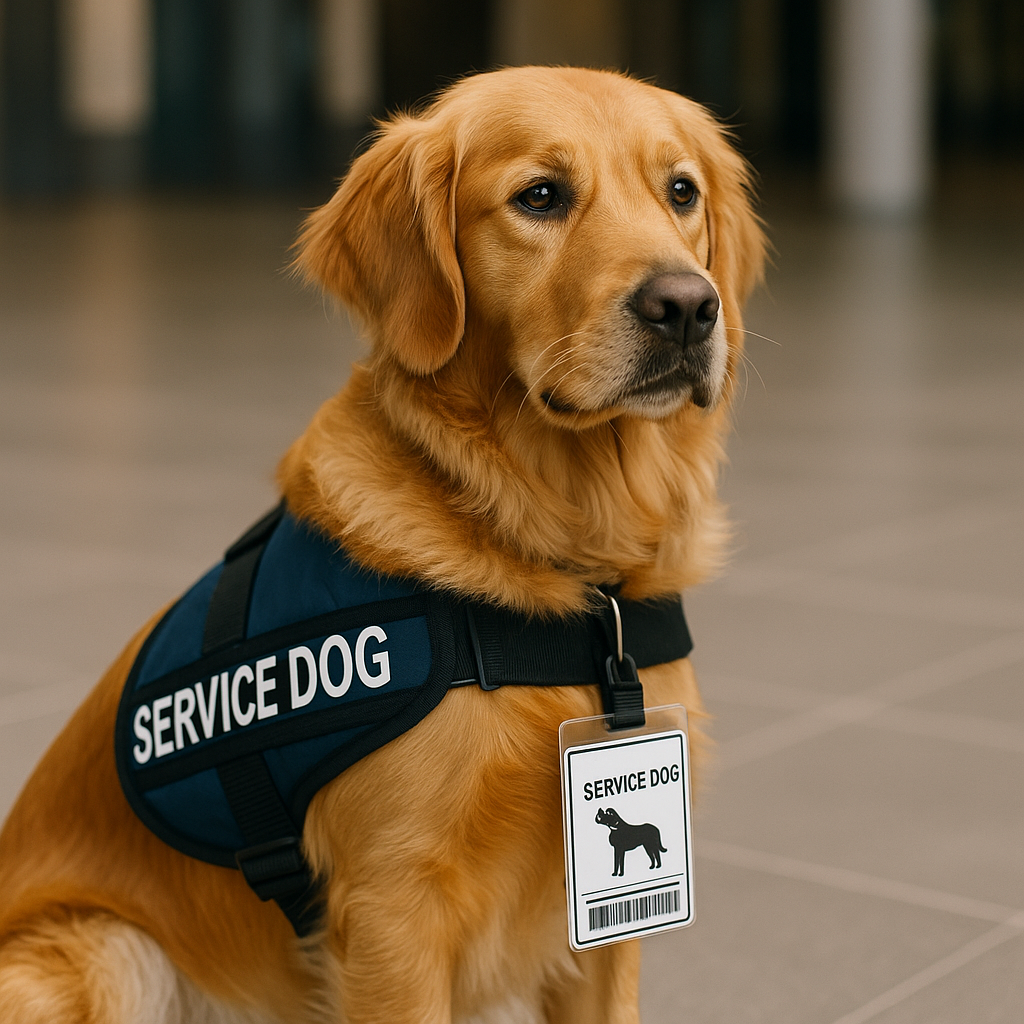
? Service Dog Vest
- Most recognizable
- Usually marked “Service Dog” or “Do Not Pet”
- Durable, breathable materials
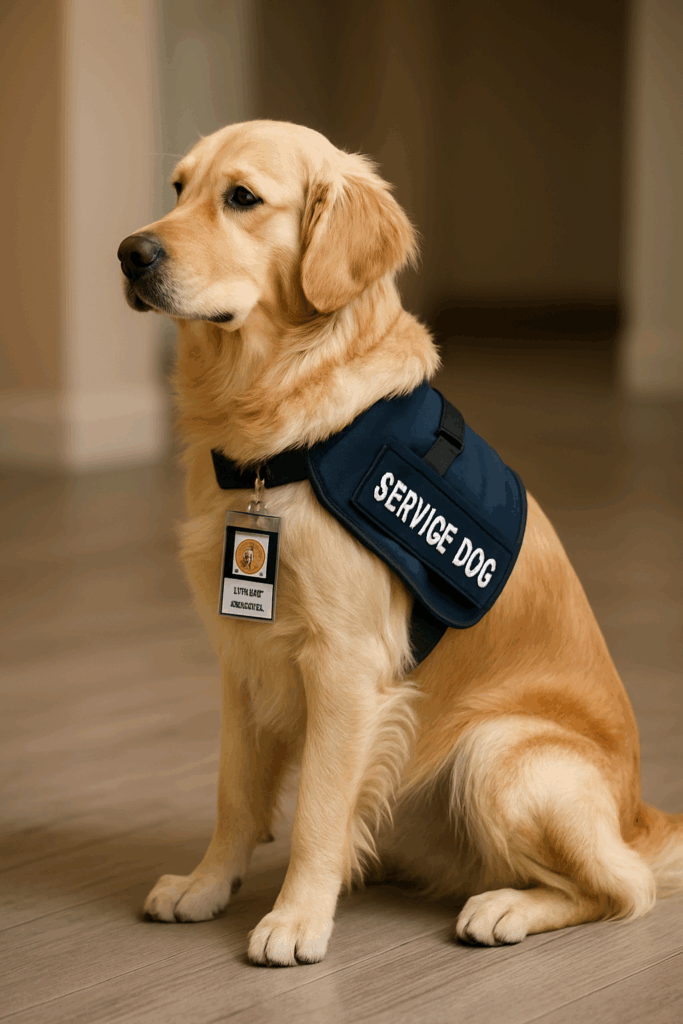
ID Cards or Tags
- Include dog’s name, handler name, ADA info
- Can be shown when traveling or dealing with gatekeepers
? Leash Wraps or Patch Kits
- Ideal for small dogs or secondary messaging
- Allow customization without a full vest
How to Choose the Right ID Gear
When selecting identification for your service dog, consider:
- Durability: Choose weather-resistant, washable materials.
- Comfort: Lightweight, breathable materials reduce stress.
- Visibility: Bright colors or reflective stitching improve visibility.
- Functionality: Choose gear that supports the tasks your dog performs.
? Tip: Less is more. A clean, simple vest with clear wording is more effective than flashy accessories.
Common Myths and Misconceptions
❌ Myth #1: All service dogs are required to wear a vest or ID.
➡ Fact: There is no federal requirement for any form of ID, vest, or tag; however, it can decrease confrontations and/or questions that would prevent you from entering an establishment.
❌ Myth #2: Staff can demand to see certification or paperwork.
➡ Fact: Under ADA rules, only two questions are allowed (Is it a service animal? What task does it perform?). No paperwork is required, but is often more helpful than filing an ADA complaint.
❌ Myth #3: Only large breeds can be service dogs.
➡ Fact: Any breed or size can qualify if properly trained to perform a task related to a disability.
❌ Myth #4: Emotional support animals (ESAs) and therapy animals get the same access.
➡ Fact: Only service dogs have full public access rights. ESAs and therapy animals are covered under different laws (e.g., the Fair Housing Act).
❌ Myth #5: Identification guarantees access.
➡ Fact: It helps, but access is based on the dog’s function and behavior—not the vest or tags.
What Businesses Need to Know About Service Dog Identification
Business owners and employees play a crucial role in upholding ADA rights while maintaining safe and respectful environments. Here’s what you should know:
✅ What You Can Do
- Ask the two permitted questions (Is it a service dog? What task?)
- Expect the dog to be under control and well-behaved
- Request removal if the dog is out of control or not housebroken
? What You Cannot Do
- Ask for medical documentation
- Require the dog to wear a vest or ID
- Charge a pet fee or deny access based on allergies or fear
? Best Practices for Staff Training
- Train employees on ADA compliance
- Post clear signage welcoming service animals
- Handle issues discreetly and respectfully
? Real-World Tip for Businesses:
If a dog is disruptive (barking, lunging, relieving itself), you are within your rights to ask that it be removed. However, do not assume based on breed, size, or lack of visible ID.
Real-Life Example: Identification in Action
Elena, a handler with narcolepsy, often experiences sudden episodes of muscle weakness. Her service dog, Bruno, wears a vest clearly marked “Medical Alert Dog – Do Not Distract.” While boarding a flight, an airline staff member started questioning her. Elena calmly pointed to the ADA card clipped to her vest. The situation resolved quickly—no further delay, no confrontation.
Proper ID can’t stop every issue, but it equips you to handle them confidently.
Frequently Asked Questions
❓ Is a vest legally required for my service dog?
No. It’s highly recommended, but not required under federal law.
❓ What’s the difference between a service dog and an ESA?
Service dogs are task-trained for disabilities and have public access rights. ESAs offer comfort and support but are not granted public access under the ADA.
❓ Can a business deny me if my dog isn’t wearing ID?
Legally, they cannot deny access based on lack of ID. However, ID often prevents misunderstandings.
❓ Can I buy a vest online for any dog?
Yes—but misuse is illegal and unethical. Only legitimate service dogs should wear identifying gear.
❓ What should I do if I’m denied access?
Remain calm. Educate if possible. File a complaint with the Department of Justice (ADA.gov) or a local advocacy group.
Practical Tips for Handlers
- Keep an ADA info card with you or clipped to your dog’s vest.
- Avoid confrontations—calmly state your rights.
- Choose identification that’s clear, comfortable, and specific.
- Have backup gear when traveling.
- Document recurring access issues in case legal support is needed.
Data and Credible Sources
- ADA.gov – U.S. Department of Justice official guidance
- National Service Animal Registry – Reports show 65% fewer public access issues when dogs wear clear identification
- U.S. Department of Transportation – Updated airline policies regarding service dogs (2021)
Final Thoughts: Visibility Builds Understanding
In a perfect world, no one would question a service dog team. But in reality, misunderstandings happen. Identification can’t replace legal rights, but it can support them. It’s a simple tool that promotes trust, eases access, and educates the public—all while giving the handler confidence.
You don’t have to wear a badge to be a hero. But a vest on your dog can help others recognize that they are one.
Conclusion
Looking for reliable, ADA-friendly service dog gear?
? Visit NSARCO.com to explore professionally designed service dog vests, ID kits, and education resources to help you navigate public access with ease.
? Want to learn more? Explore related pillar posts: